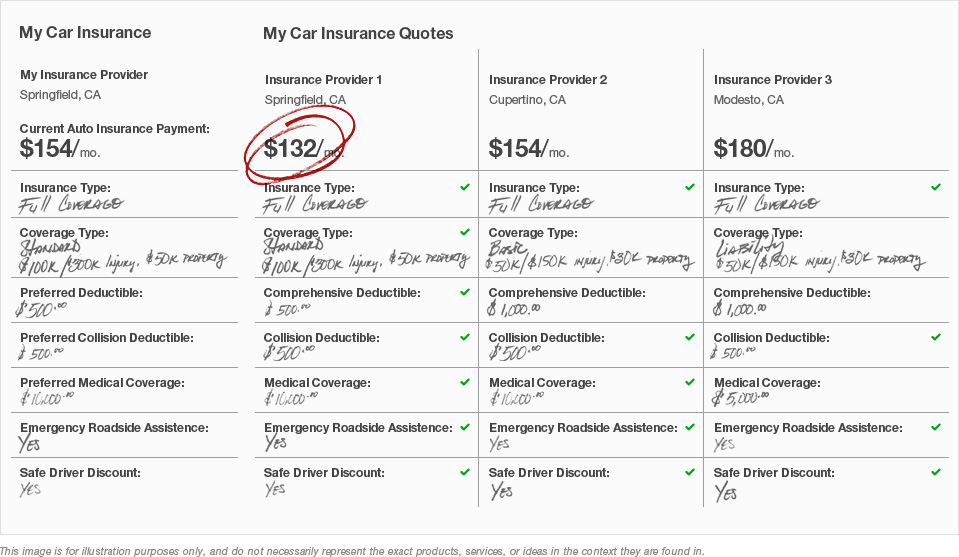





Time and time again we have extolled the virtues of using the internet to comparison shop for the best car insurance rates. But you still haven’t done it. Why? Maybe it’s because you think it will be hard. Maybe it’s because you don’t know where to begin. Either way, with a little initiative and some help from this online guide, you will be well on your way to saving big bucks on your car insurance - you might even be able to increase your coverage while saving on your premiums at the same time!
Step 1 - Understand Your Existing Coverage
You won’t be able to be an effective shopper if you don’t know what you already have, and how much you’re paying for it. The first step is to find your declarations, or dec sheet. It is the one page document your insurance agent gave you explaining your coverage - it’s probably stuffed at the back of your filing cabinet. Read over your dec sheet to find out what coverages you have and at what limits and deductibles. Then, of course, look at the bottom line - what are you paying? You have to do a cost-benefit analysis to determine whether or not you’re getting your money’s worth. Too little coverage is one problem, but having too much coverage is literally throwing money away.
Of course, none of this will mean anything if you don’t understand your coverages. Do you know what uninsured motorists coverage is? How about other-than-collision coverage? Do you know what endorsements or riders are? If not, then take an hour or so to scan through this web site. The small investment of time in your car insurance education will more than pay for itself as you begin to comparison shop.
Step 2 - Make Sure You Have Your Information at Your Fingertips
In order to get a car insurance quote, you will need the following information:
* Your driver’s license number
* The year, make, and model of your vehicle
* Your vehicle identification number (also called a VIN number, which is kind of redundant)
* The name and information of the company through which you financed your vehicle (i.e. your bank)
Of these items, your car’s VIN number is the one you might not be sure of. In addition to being on your title and registration, it can usually be found on the outside of your car itself - on the driver’s side, near where the hood meets the windshield. Your car’s VIN is a 17-digit unique number that identifies your specific car - sort of like a Social Security number for automobiles.
Step 3 - Don’t Forget to Ask for Discounts
You may be qualified for discounts on your car insurance that you don’t even know about. For example, any of the following features typically justify a discount with most insurers.
* Airbags
* Anti-lock brakes
* Anti-theft device
* Automatic seatbelts
* Multiple car policy (two or more cars on the same policy)
* Multiple policy discount (i.e. auto insurance and homeowner’s or renter’s insurance with the same company)
These are just a few of the many discounts available to savvy comparison shoppers. For more information, browse around carinsurancerates.com.
| Home Insurance |
| Health Insurance |
| Life Insurance |
| Renter's Insurance |