






Full Coverage Car Insurance
In the broadest sense, full coverage auto insurance refers to a policy that includes vehicle-specific protections, such as comprehensive and collision coverage, in addition to the usually mandatory liability component. By that definition, full coverage car insurance is essentially the antithesis of a "liability-only" policy.
Because coverage standards vary so widely among carriers and states, articulating more specific definitions of full coverage insurance is more challenging. One carrier might define full coverage as a policy with every available type of coverage, whereas another might define it as a policy including any protection beyond liability. In what follows, you'll find a general overview of what full coverage typically entails and a guide to help you decide if full coverage insurance is the best option.
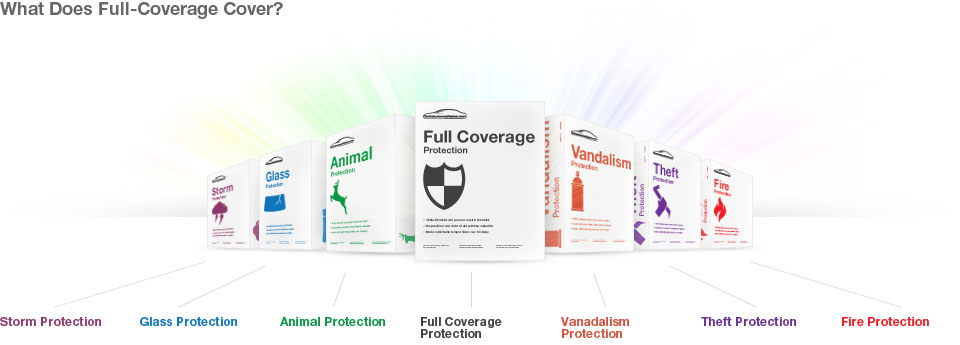
Full Coverage Insurance: Standard Protections
Most major carriers offer a fairly uniform collection of coverages in a full coverage policy. Of course, as with any policy, liability coverage is a must, but full coverage car insurance policies tend to have more robust maximums than a garden variety policy. A full coverage policy usually has property damage and bodily injury liability ceilings far beyond the requisite legal minimum.
The presence of comprehensive and collision coverage is arguably the defining characteristic of full coverage auto insurance. These coverages take the policy's level of protection a step further by insulating against damage done to the insured's vehicle and not just to those of other drivers. Likewise, a standard full coverage policy will also usually include either personal injury protection (PIP) or medical payments coverage. These protections pay for the medical expenses of the driver and the passengers in the event injuries occur in an accident regardless of fault.
Another full coverage auto insurance policy staple is underinsured/uninsured driver protection that pays for the insured's injuries, and possibly property damage depending on state law, in the event the at-fault party was uninsured or inadequately insured. Some states require this protection by law and may also require personal injury coverage. The final protection included in a full coverage policy is rental reimbursement, which will pay for a rental car up to a daily limit for a finite period of time while the insured's vehicle is repaired or replaced.
Do You Need Full Coverage?
Whether full coverage car insurance is the right choice for you hinges almost solely on how much you can afford in premiums each month and how financially risk-averse you are to potential accident-related losses. While cheap full coverage auto insurance is certainly widely available, it is more difficult to find affordably than less involved policies. Evaluate your budget to see how large of a premium you can accommodate and also take into consideration how much you could afford to lose in the event a loss ended up costing more than the limits on the coverage you carry.
![[X] (click to close)](/images/x_close.png)